Why Meeting Rooms Are Being Built Inside Rooms
Conventional meeting space follows one order: walls first, then the room. Reality often reverses it — a three-year office lease where the landlord will not allow new partitions, a fire submission that takes two or three months, one 20-person boardroom per floor that gets blocked by a four-person conversation.
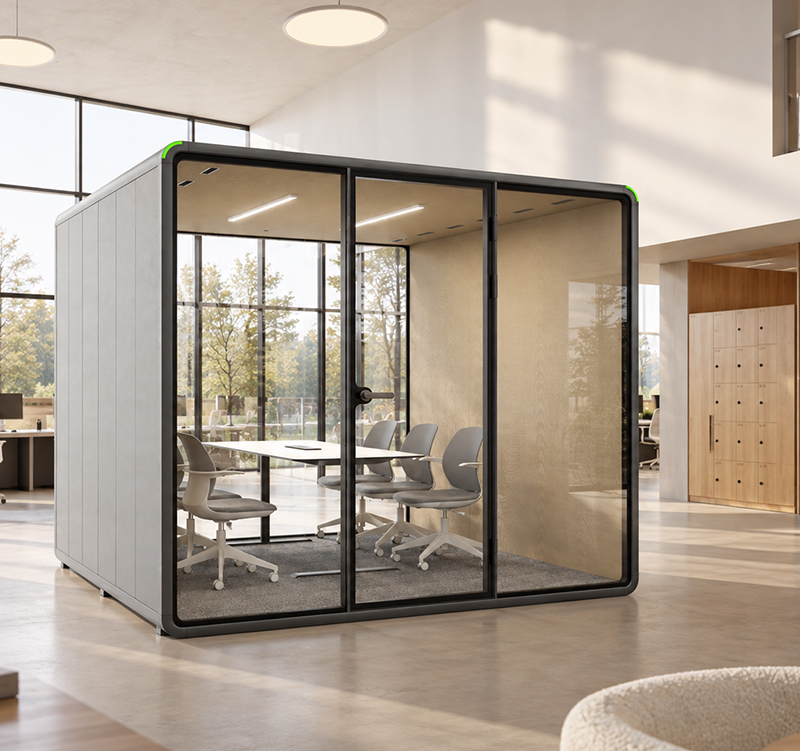
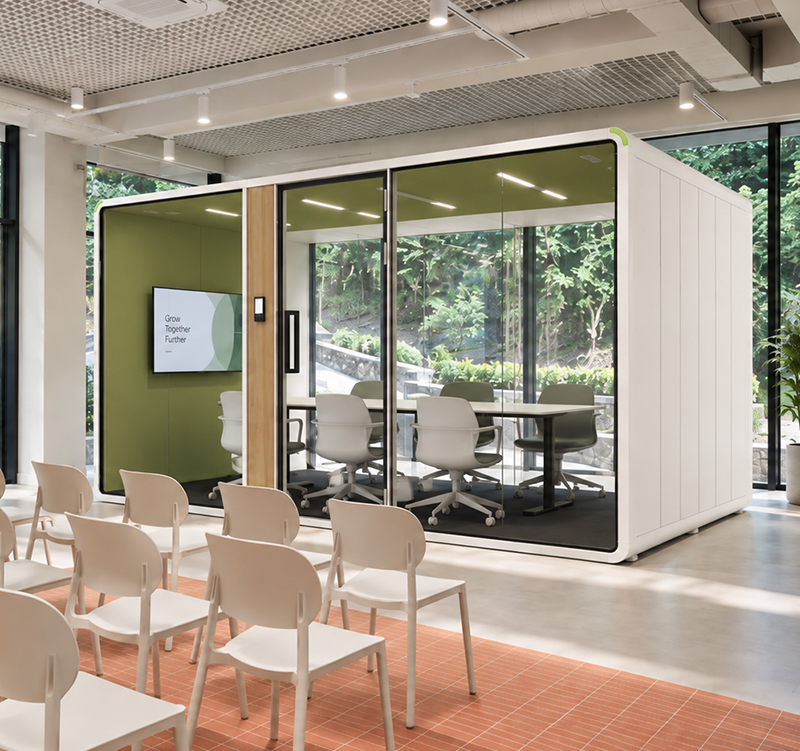
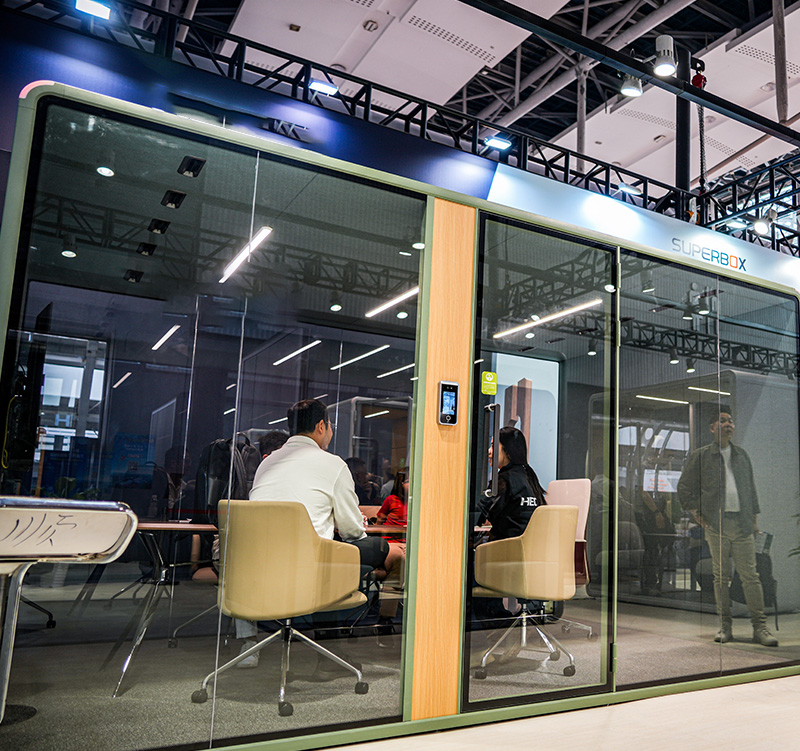
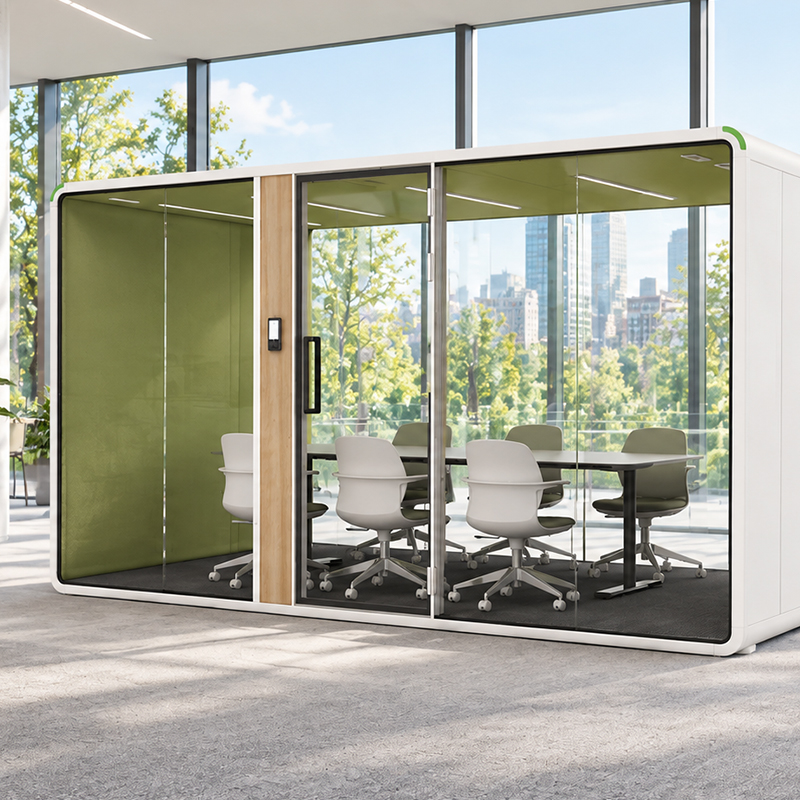
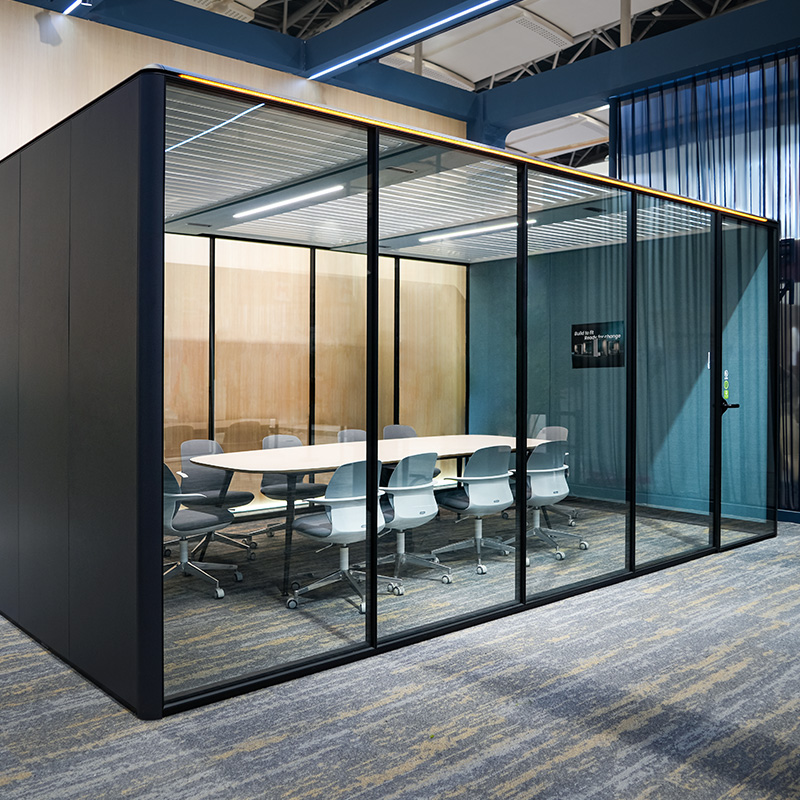
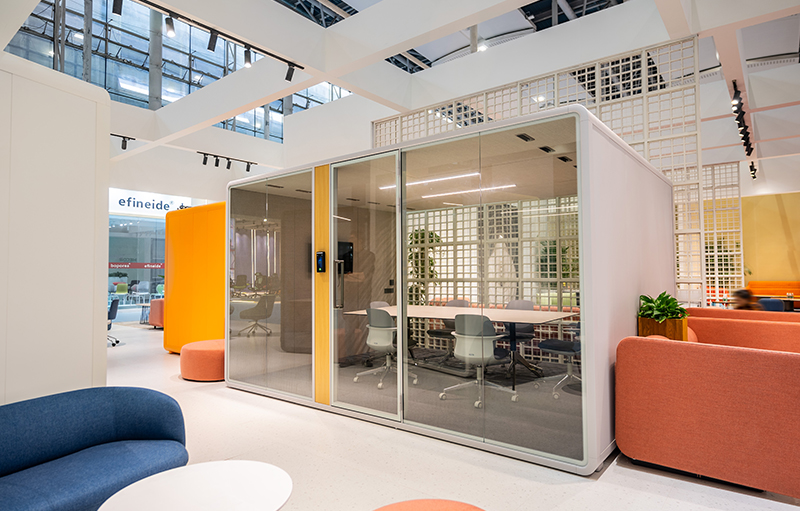
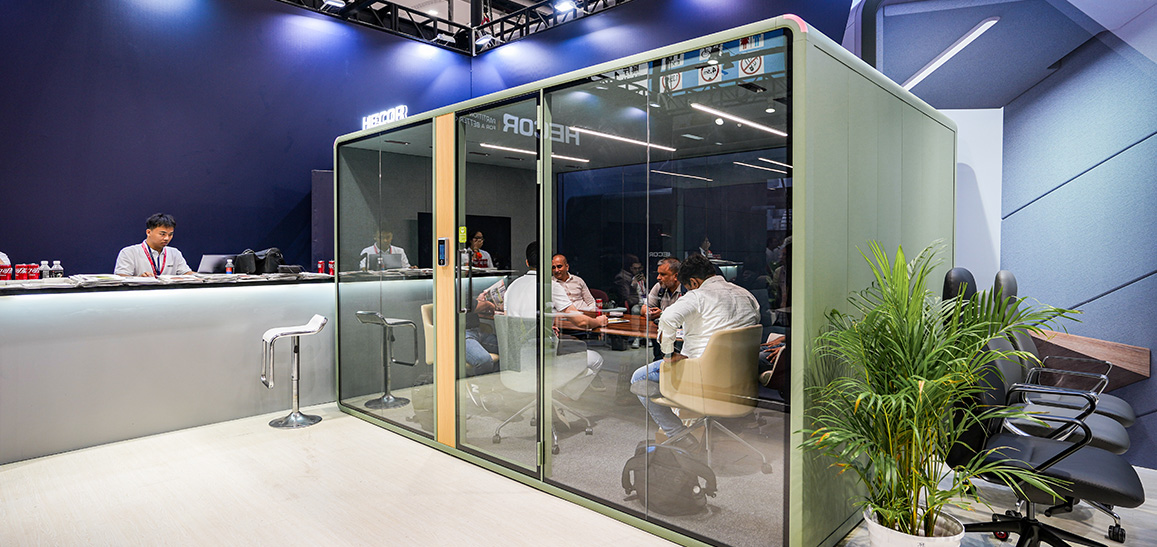
A meeting pod answers that gap. It is a room that can be moved: 2–3 square metres of floor, containing a table, chairs, lighting and ventilation, and once the door closes, an independent acoustic space. Placed in an open floor, it adds a 4–8 person meeting room without touching a single wall.
When is it worth buying? Three numbers decide it: more than 20 small meetings a month, average length 30–60 minutes, and a large room that is regularly occupied by small groups. Hit all three and a pod usually buys more efficiency than two extra desks. Miss them — a handful of small meetings a month, or meetings that routinely run past twelve people — and a built partition is the honest answer.It helps to see the neighbouring options together: for one person taking calls or concentrating, see Office Phone Booths; for discussion rooms around ten people, see Small Meeting Room Furniture; for lecture-style briefings, see Auditorium Seating Layout; chairs and loose seating come from Meeting Chairs.