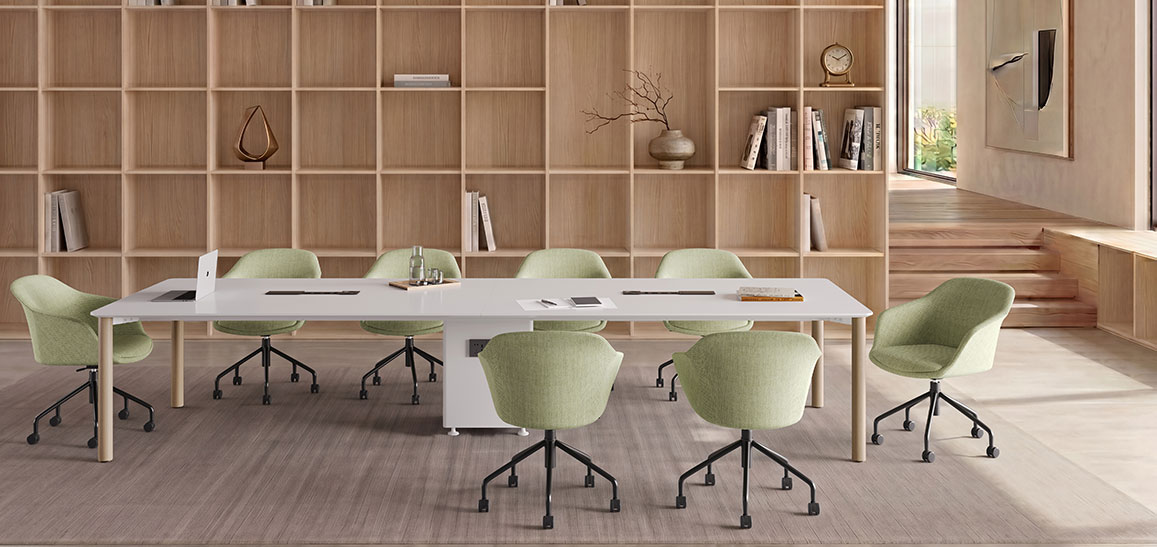
Melamine Meeting Tables for Small Meeting Rooms

1147x542


Real Grain, Not Real Timber

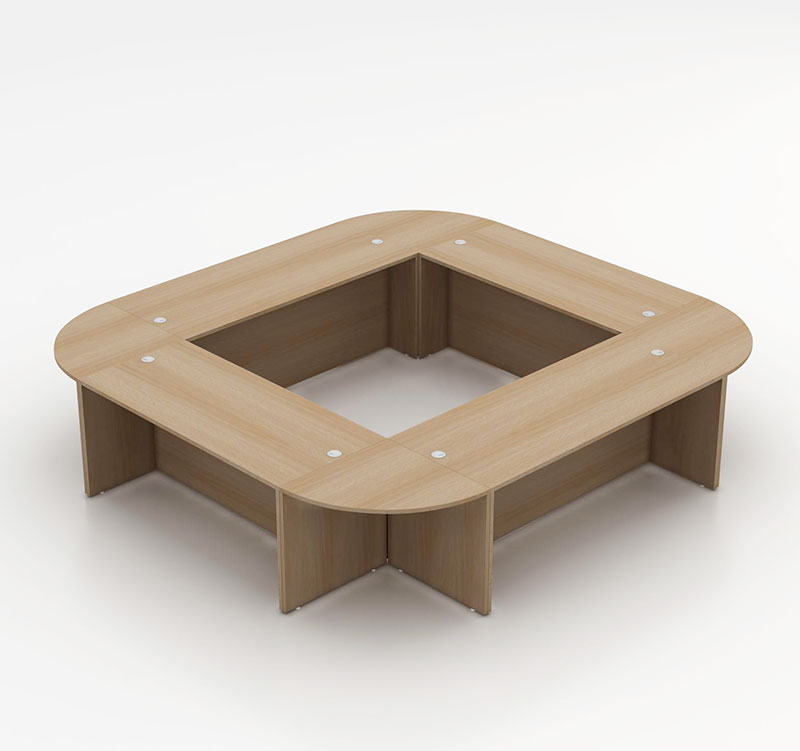
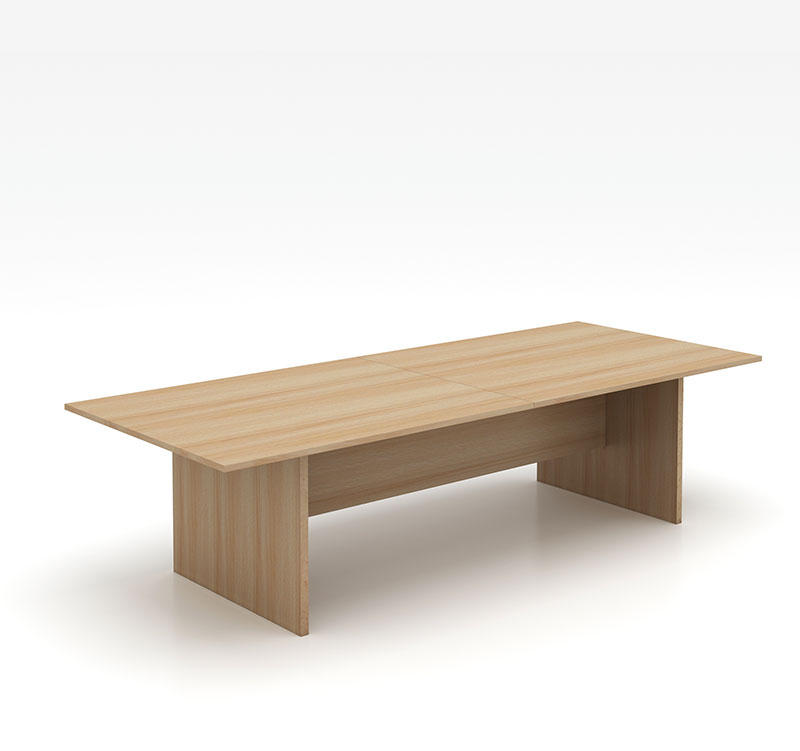
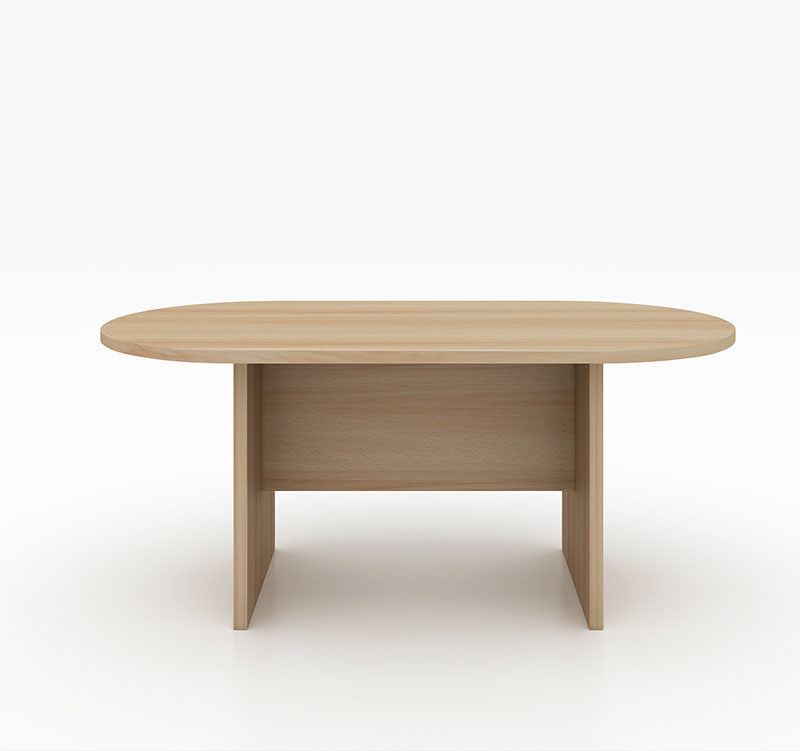
A melamine meeting table is built from a core — usually particleboard or MDF — faced with melamine-impregnated paper. Woodgrain, stone and solid colours can all be printed, so the top can look convincingly timber while the core is not. That is not a flaw: the face resists stains and scuffs, wipes clean easily, holds colour consistently across a batch, and matches on a repeat order. For design studios and creative teams that want atmosphere on a controlled budget, it is easier to live with than solid timber. Three things to check: tops are commonly 18mm or 25mm, and thin tops show deflection over long spans; edging is usually 1mm or 2mm, and 2mm survives knocks better; where panel end legs are used, check the legroom at the head of the table, because the transverse panel eats into it.
Fix the Headcount, Then the Top

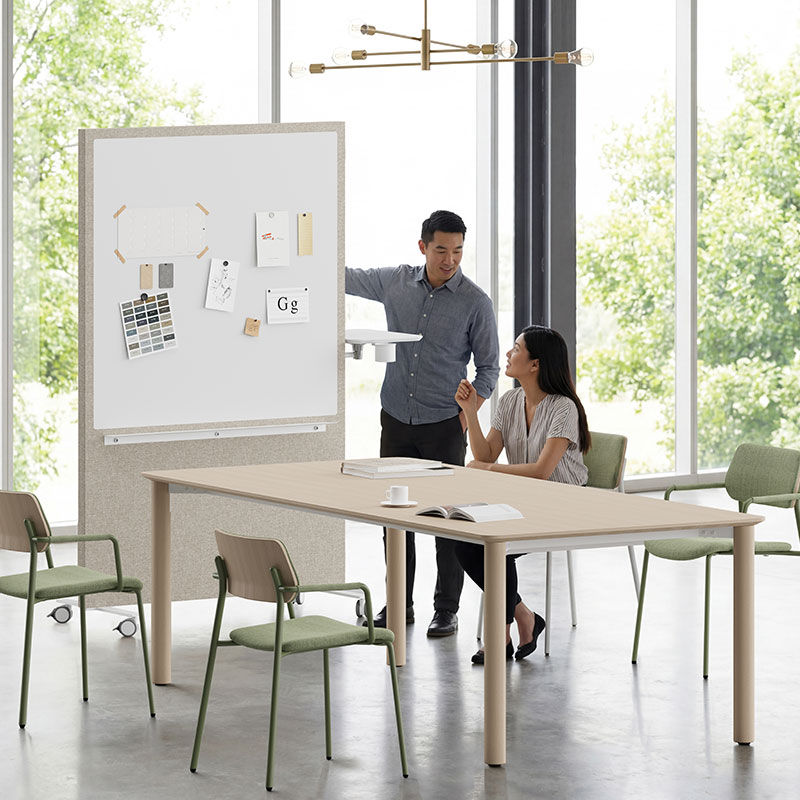
Keep the order straight. Fix the usual attendance first, then size the top from the clear room dimensions: allow 600–750mm of table edge per person, set the top at 720–750mm with at least 680mm clear beneath it, keep 600mm behind pulled-out chairs and 900mm where people walk past. Rectangular tops suit drawings and sample books, round or enclosed shapes suit discussion, and panel-leg tables need the head position checked — most people measure the length and forget the end seat. In a compact room, drop a seat before pushing the route under 600mm; give files, samples and drinks to a wall-side cabinet and keep the top to laptops, cups and a casting device.

  • 559x559

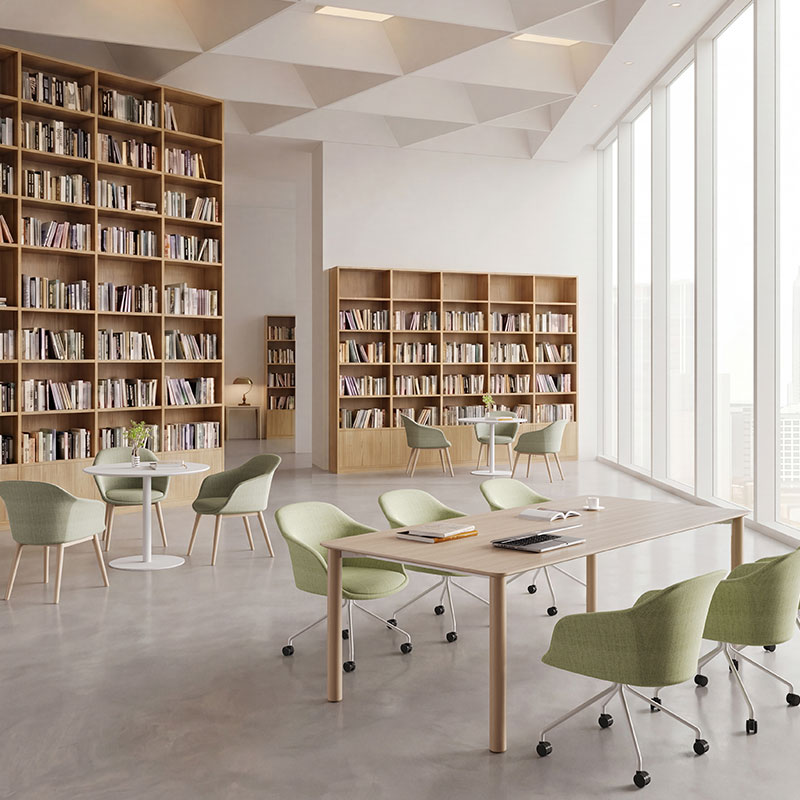
    Say this plainly or the client will be disappointed: a melamine top is a flat hard surface and reflects sound, so a table cannot fix reverberation in a small room. Rooms with glass partitions, hard floors and an exposed ceiling tend to boom; the correct division of labour is furniture for atmosphere and the fit-out for acoustics. Upholstered chairs, rugs and curtains absorb some mid and high frequency, while wall or ceiling absorbers handle the room as a whole. Prefer fabric or soft-backed chairs over all-mesh for this reason; a full panel modesty board under the top blocks a little reflection, but treat that as a side effect, not a selling point.

  • 559x559

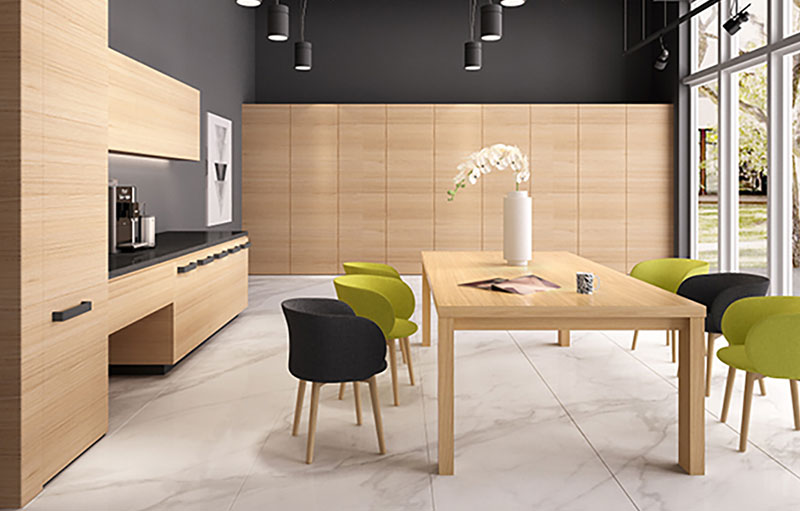
    Three things are worth verifying. Core: particleboard versus MDF differs in density and screw hold, which decides whether connectors stay tight. Edging: check the edge band thickness, whether the glue line is continuous and whether corners have chipped — this is where moisture gets in, and a melamine top that swells at a broken edge cannot be repaired. Test reports: formaldehyde release should be documented, with grades such as E1 and stricter E0 or ENF options, and the report must cover the core and face you are ordering rather than a general "eco board" claim. For structure, BIFMA office furniture testing standards are a useful reference for stability and load, and long tables need a stated mid-span support arrangement.

739x472

Care and Reuse: Wipe-Friendly, But Keep It Dry

Day-to-day care is easier than solid timber: damp cloth, neutral detergent, dry after wiping, and coffee or marker dealt with the same day usually leaves nothing behind. Avoid only three things — standing water, especially at edge joints; prolonged direct sun, which shifts the colour; and scouring pads or strong solvents, which mark the face permanently. If layouts change often, confirm the table's weight, whether connectors come apart and whether the route clears lifts and doors before ordering. Panel tables are heavy and suit fixed positions; for frequent moves, choose a castor or folding option. Shallow scratches can be touched up locally, deeper damage usually means a replacement part — state that at quotation stage.